
People love stories.
For millennia, we've been telling them to each other.
But long before we could write, before books existed, and before language became as complex as it is today, we told stories through images.
This ability has endured to this day.
This is why some visual moments can touch us deeply, even without a single word being spoken.
Language works through analysis.
We hear a sentence.
We interpret it.
We understand its meaning.
Images work differently.
They have an immediate effect.
A powerful image often reaches us faster than our mind.
First, a feeling arises.
The explanation comes later.
Try to remember a presentation from two years ago.
You'll probably find that difficult.
Now think of an extraordinary visual moment you've experienced.
You might still remember it.
This is because our brain processes images differently than pure information.
An interesting image rarely provides a single answer.
It opens up possibilities.
Each viewer brings their own experiences.
This creates a personal connection.
The same image can have different meanings for different people.
That's exactly what makes visual art so valuable.
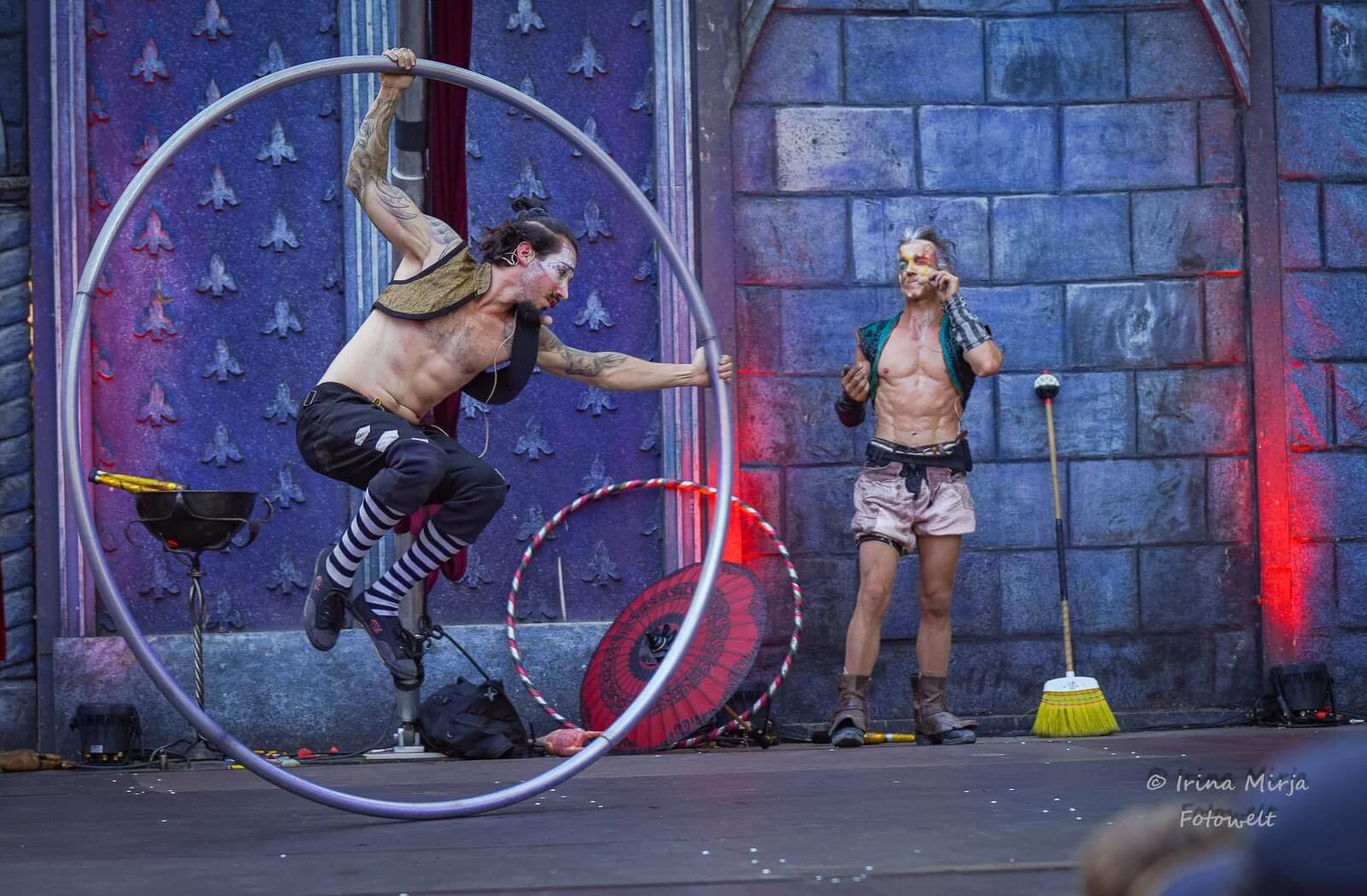
In contemporary circus, images are created not only by stage designs or lighting.
They are created through movement.
A body in space.
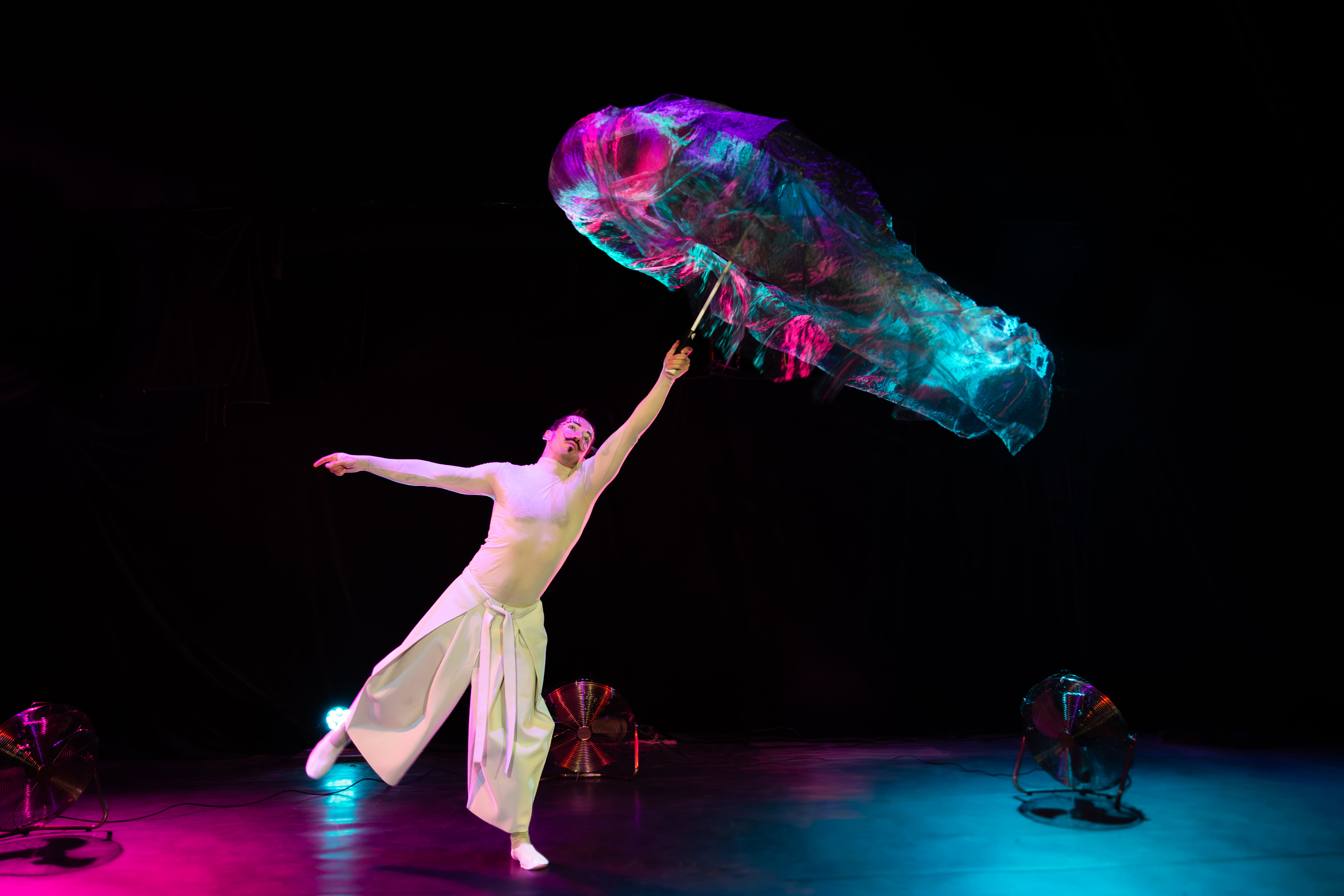
An object in the air.
A fabric caught by the wind.
These moments can create an emotional effect that goes far beyond their technical execution.
Many modern productions don't start with a story.
They start with an image.
An image that raises questions.
An image that evokes emotions.
An image that stays with you.
Such images often inspire entire performances.
One of the greatest advantages of visual art lies in its international comprehensibility.
A powerful image needs no translation.
It works independently of language, origin, or culture.
That's why visual elements play an increasingly important role in modern stage productions.
In a world full of information, attention is becoming increasingly valuable.
Visual performance creates moments that escape the flow of information.
It doesn't demand understanding.
It invites you to experience.
Words can explain.
Images can move.
That's why powerful visual moments possess a special strength.
They don't stay in your head.
They stay in your heart.
Because they are experienced directly and trigger emotional responses before they are analyzed.
Because powerful images are universally understood and create an emotional impact.
Yes. Many modern productions use images as a central form of storytelling.

.webp)

