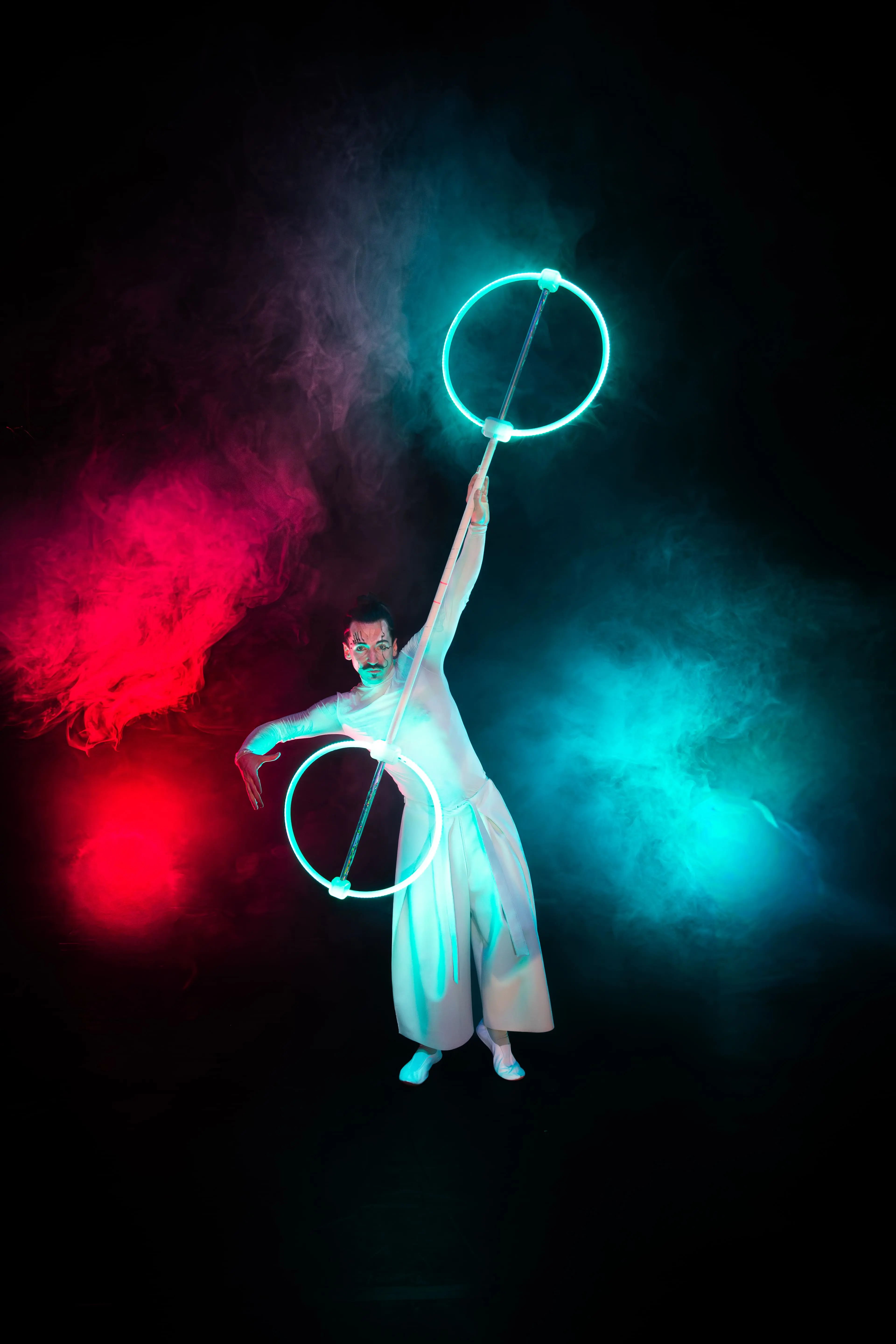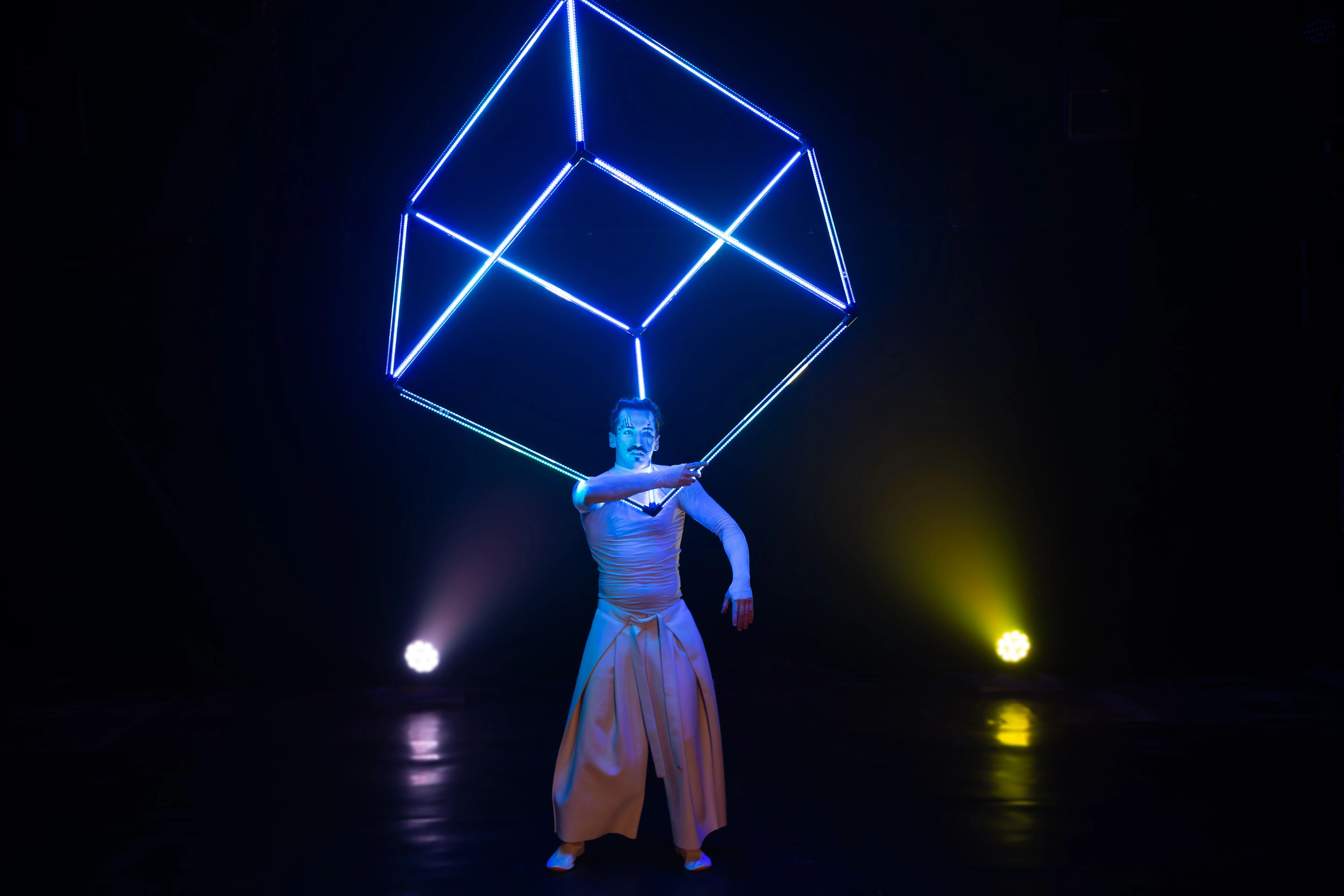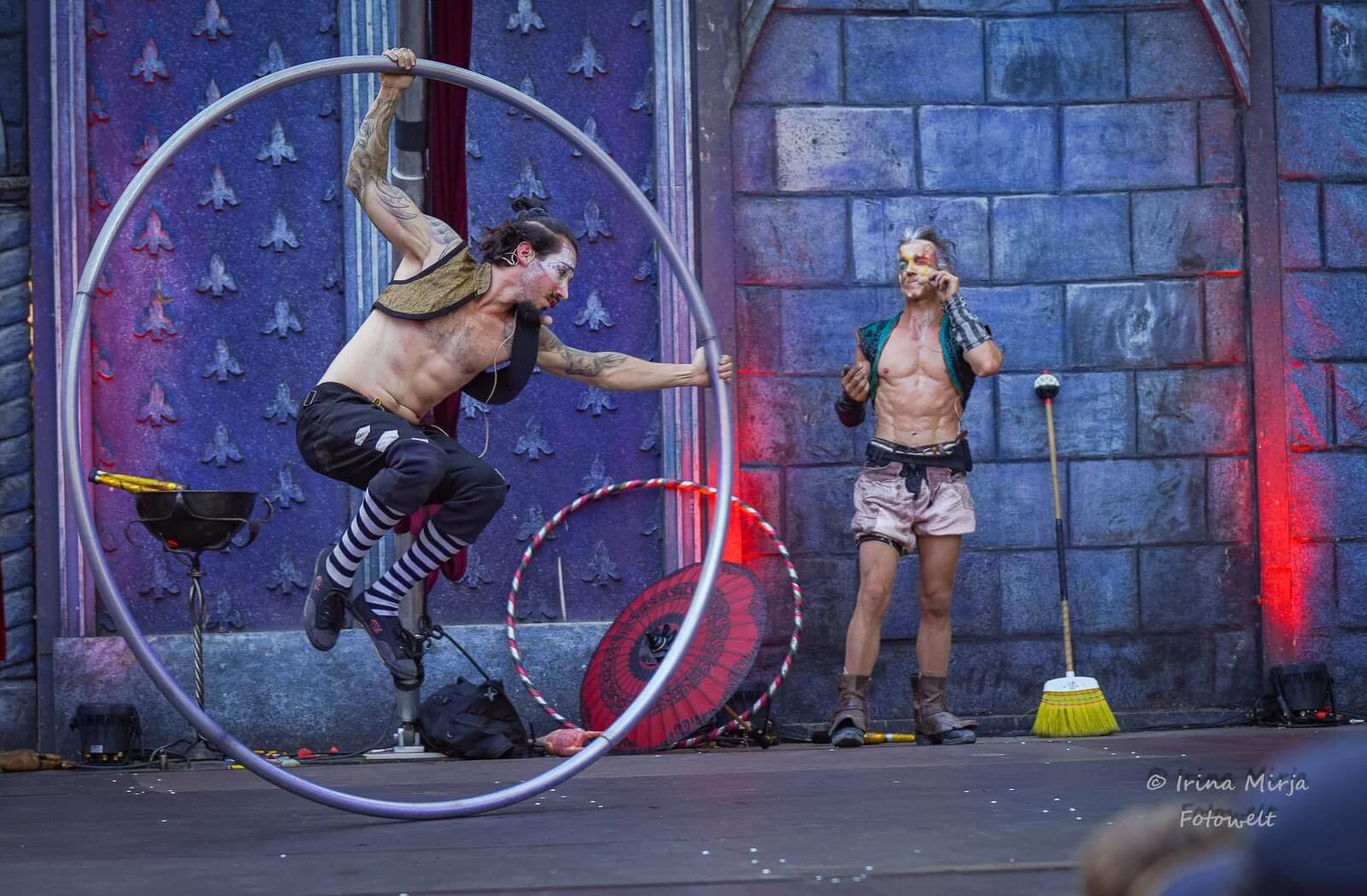
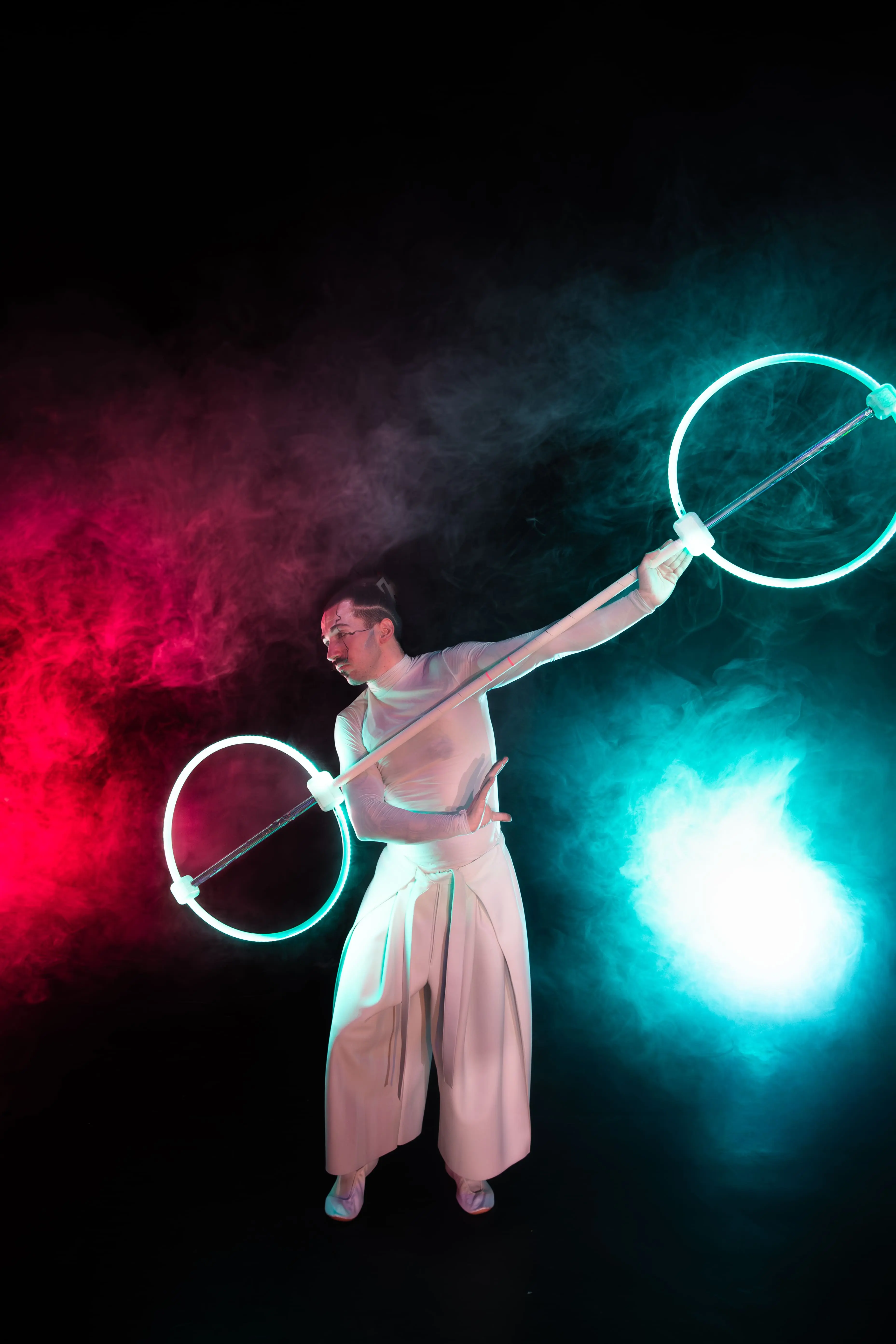
Just a few decades ago, the boundaries between dance, theatre, and circus arts were much more clearly defined.
Dancers danced.
Actors acted.
Acrobats showcased technical skills.
Today, productions are increasingly emerging that deliberately blur these boundaries. Especially in Contemporary Circus, various disciplines merge into a shared artistic language.
But why is this happening?
Every art form has its own strengths.
Dance can express emotions through movement.
Theatre can explore relationships and conflicts.
Circus arts create awe, risk, and extraordinary visuals.
Many artists eventually began to realize that the most exciting works often emerge where these areas converge.
Dance doesn't just influence the movements on stage.
It changes the quality of movement.
A jump is not just a jump.
A turn is not just a turn.
Through dance work, the following are created:
This gives artistic movements additional expressive power.
Theatre deals with presence.
With relationships.
With attention.
With meaning.
These aspects complement the technical side of acrobatics with an emotional and dramaturgical layer.
A glance can suddenly become more important than a trick.
A pause can create more tension than movement.
Acrobatics remains the foundation of many contemporary circus productions.
It expands the body's possibilities.
It creates images that seem impossible in everyday life.
It creates:
It is precisely these extraordinary skills that make Contemporary Circus so unique.
Connecting different disciplines allows for a new form of communication.
Instead of merely telling a story, it can be physically experienced.
The audience doesn't merely observe.
It interprets.
It discovers its own meanings.
This often leads to deeper emotional experiences.
The audience has changed.
Many people today are looking for art forms that defy clear categorization.
They are interested in works that are:
all at once.
Contemporary Circus fulfills precisely these expectations.
International festivals and theaters are increasingly embracing interdisciplinary formats.
This leads to productions that constantly evolve and explore new forms of expression.
Event organizers are also recognizing this trend.
Modern show acts benefit from combining various art forms, as they can appeal to a broader audience.
The fusion of dance, theater, and acrobatics opens up new perspectives.
Audiences experience more than just technical feats.
They experience atmospheres, images, and emotions.
This creates a form of performance that leaves a lasting impression.
Many artists today view contemporary circus less as a discipline and more as a creative space.
A space where new ideas can emerge.
A space where movement, objects, music, and visuals interact on equal terms.
It is precisely this openness that makes the art form so captivating.
The combination of dance, theater, and acrobatics is one of the most important characteristics of contemporary circus.
It enables new forms of expression and creates performances that combine technical virtuosity with emotional and visual depth.
This is precisely why contemporary circus is considered one of the most innovative developments in modern stage art today.
Because it can create more complex and multi-layered stage experiences.
Not necessarily, but many artists benefit from dance influences and movement research.
Theatre brings presence, dramaturgy, and emotional depth to the performance.
Because it combines acrobatics, emotion, movement, and visual power in a single art form.