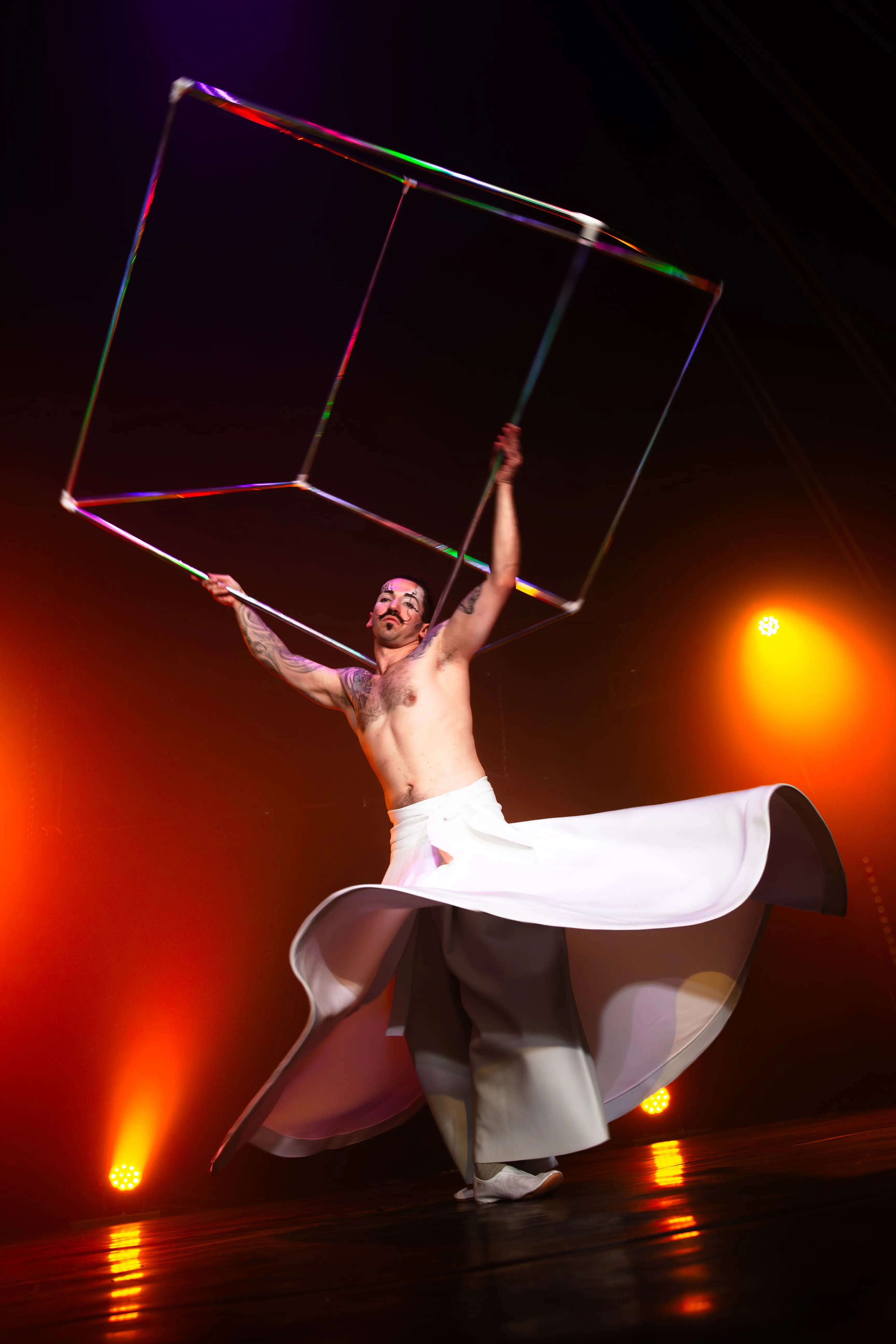

People often associate stories with language. Books tell tales through text, films through dialogue, and presentations through spoken content.
Yet, some of the most powerful emotional experiences emerge entirely without words.
A glance. A movement. An image in space.
Modern visual performance harnesses precisely this form of communication.
Words are analyzed.
Images are experienced.
When we encounter a powerful visual image, our brain often reacts faster than our intellect.
We don't understand first.
We feel first.
That's why some stage moments linger in our memory for years, even when not a single word was uttered.
Everyone possesses an intuitive ability to read movement.
We recognize:
often within a few seconds.
It doesn't matter what language someone speaks.
The body communicates universally.
In Contemporary Circus and Physical Theatre, movement isn't just about technique.
It becomes a statement in itself.
A slow movement can express vulnerability.
A sudden acceleration can create tension.
Repetition can make memory or longing visible.
This creates a form of storytelling that works without language.
A distinctive feature of modern performance art is the transformation of objects.
A piece of fabric doesn't simply remain fabric.
It can become wind.
Memory.
Connection.
Freedom.
Meaning is not created through explanation, but through the context of movement.
Light affects our perception more profoundly than many people realize.
The same movement can appear completely different:
This creates an additional emotional dimension.
The space itself becomes part of the narrative.
A visual performance often doesn't provide clear answers.
It opens up possibilities.
Every viewer brings their own experiences, memories, and emotions.
This creates a personal connection to the performance.
Two people can see the same scene and still discover different stories within it.
At international events, people from different cultures and languages often come together.
Visual performances overcome these barriers.
A powerful image needs no translation.
That's why contemporary show formats are increasingly used at:
used.
Our attention is constantly demanded by information every day.
Visual art offers a contrast.
It doesn't demand the consumption of information.
It invites you to consciously experience a moment.
That's precisely why its importance is growing worldwide.
Emotions are not exclusively created by language.
Often, it's images, movements, and atmospheres that touch people most deeply.
Modern visual performance harnesses this power and creates experiences that resonate long after a show ends.
No. Most productions work through images, atmosphere, and emotions.
Because they are experienced directly and create space for personal interpretations.
Yes. It works independently of language and thus reaches a broad audience.

.webp)